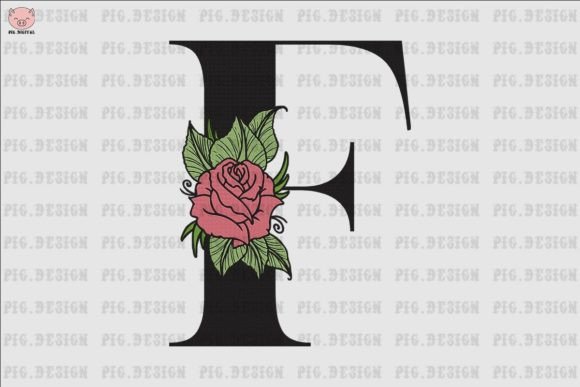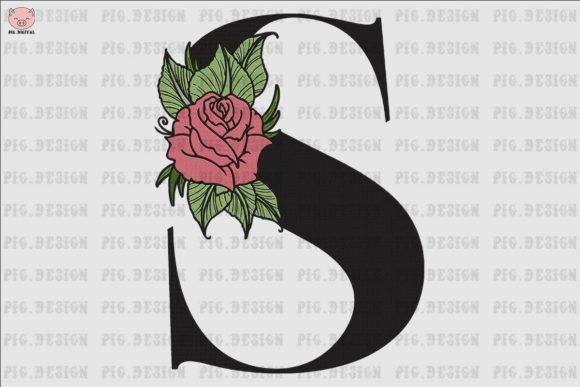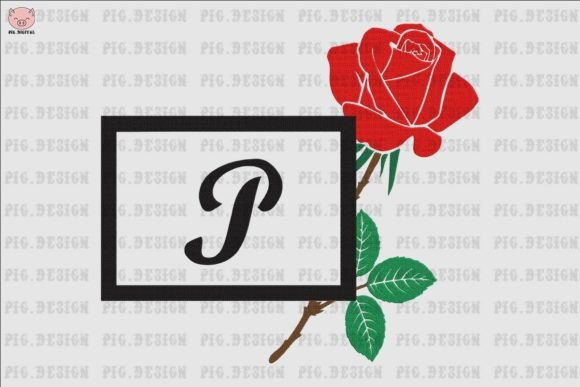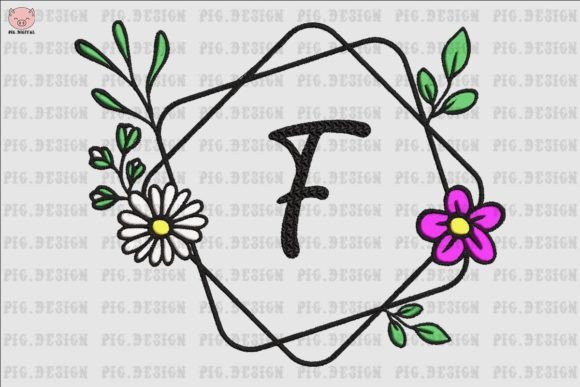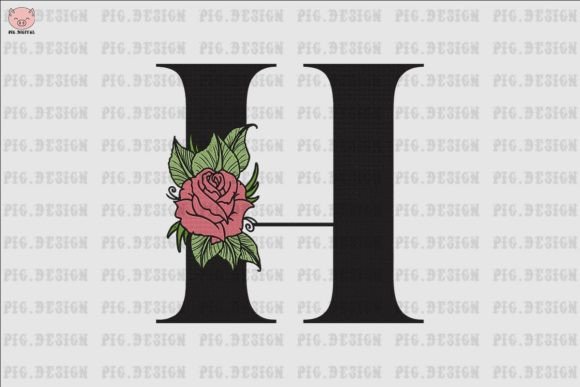
Flower Rose Font H: Elegant Embroidery Typography
If you’ve ever searched for a font that balances botanical charm with crisp stitchability—something that feels both timeless and fresh—Flower Rose Font H is likely what you’ve been missing. It’s not just another decorative script; it’s a thoughtfully engineered machine embroidery design built for clarity, flow, and versatility across fabric types and project scales.
This isn’t digitized calligraphy slapped onto a hoop. Flower Rose Font H was developed with real-world stitching in mind: consistent thread tension, minimized jump stitches, balanced letter spacing, and gentle curves that translate beautifully on cotton, linen, denim, and even lightweight knits. Whether you're monogramming a baby blanket or branding tote bags for your small business, this font delivers clean, confident results—without requiring advanced digitizing skills.
What Makes Flower Rose Font H Stand Out?
At first glance, it’s easy to mistake Flower Rose Font H for a standard floral script—but its intelligence lies beneath the surface. Each character includes subtle stem flourishes and petal-inspired terminals that echo rose motifs without sacrificing legibility. Unlike overly ornate fonts that blur at small sizes, Flower Rose Font H maintains readability down to 1.5 inches in height, making it ideal for garment tags, sleeve accents, or embroidered bookplates.
The design avoids common pitfalls: no overlapping elements that cause thread nesting, no ultra-thin strokes prone to breaking under dense stitching, and no excessive underlay that adds bulk to delicate fabrics. Instead, it uses strategic satin column widths, tapered joins, and optimized fill densities—details that matter most when your machine is running unattended at 800 RPM.
Multiformat Flexibility for Real-World Workflows
You’ll receive Flower Rose Font H in all major embroidery file formats: PES, DST, EXP, JEF, VP3, XXX, and HUS. That means seamless compatibility whether you’re using a Brother Innov-is, Janome Memory Craft, Bernina 790, or industrial Tajima setup. No conversion headaches. No lost details from format translation. Just load, hoop, and stitch.
Each letter is individually saved as a separate file—no need to manually separate characters in your editing software. Want to spell “Sophie” across a pillowcase? Grab S-O-P-H-I-E. Need just the “H” for a custom initial on a graduation cap? It’s ready. This granular structure saves time during layout, especially when mixing fonts or layering text with appliqué motifs.
Where Flower Rose Font H Adds Tangible Value
For hobbyists and makers: It elevates everyday projects without extra effort. Stitch it onto tea towels for handmade gifts, embroider it onto denim jackets for personalized flair, or use it to label quilt blocks during group sew-alongs. Because each letter is well-spaced and proportioned, alignment stays intuitive—even when working freehand on irregular surfaces like curved cushion covers.
For small businesses and creatives: Brand consistency starts with typography—and Flower Rose Font H offers an approachable yet distinctive voice. Use it for boutique packaging labels, embroidered hangtags on ceramic mugs, or stitched logos on reusable produce bags. Its warmth invites connection, while its precision supports professionalism. Customers notice when letterforms feel intentional—not generic.
In education and community settings: Teachers use Flower Rose Font H to create tactile spelling aids, classroom name tags, or sensory-rich bulletin board letters for early learners. The gentle curves support motor skill development better than rigid block fonts, and the floral motif sparks conversation about nature, design, and craft traditions.
Practical Tips Before You Stitch
- Stabilizer matters. For lightweight fabrics like voile or rayon, pair Flower Rose Font H with medium-weight tear-away + light cut-away combo. On stretchy knits, switch to adhesive-backed cut-away to prevent puckering.
- Test first—always. Run a single “H” or “O” on scrap fabric using your intended thread and needle. Observe how satin columns lay, check for skipped stitches in tight curves, and verify color transitions if using multi-thread designs.
- Scale wisely. While the font works down to ~1.25”, avoid going smaller than 1” unless using high-density polyester thread and sharp 75/11 needles. At larger sizes (4”+), consider adding a second outline pass for definition on textured surfaces like burlap or terry cloth.
- Thread choice affects mood. Matte cotton gives a vintage, hand-stitched feel; rayon adds luminous sheen for modern apparel; metallics introduce celebration-ready sparkle for birthday banners or bridal accessories.
More Than Just a Pretty Letterform
What sets Flower Rose Font H apart isn’t just aesthetics—it’s adaptability grounded in technical understanding. It respects the limits of thread, fabric, and machine alike. That’s why educators choose it for student-led embroidery labs, why product photographers request it for styled flat lays, and why Etsy sellers report higher engagement on listings featuring its soft, confident presence.
It also bridges digital and physical storytelling. When used alongside cohesive branding—say, matching website headers and embroidered packaging—the font reinforces recognition without shouting. There’s quiet authority in its stems and grace in its loops. It doesn’t distract; it deepens.
And because it’s designed as a modular system—not a locked monogram—you retain full creative control. Rotate letters, layer them over watercolor-printed fabric, combine with geometric borders, or reverse-stitch outlines for shadow effects. It’s infrastructure, not decoration.
A Final Note on Long-Term Use
Before purchasing any embroidery font, ask: Does it scale predictably? Does it hold up after repeated washes? Does it integrate smoothly into my existing workflow? Flower Rose Font H answers yes to all three. Its digitizing accommodates shrinkage in natural fibers, includes optional underlay variations for different fabric weights, and exports cleanly into design suites like Wilcom E4, Pulse, or Embrilliance.
It’s the kind of resource that quietly improves output quality over time—not through flash, but through reliability. Whether you’re stitching one-of-a-kind heirlooms or producing 50 custom napkins for a wedding, Flower Rose Font H helps you say more with less: less frustration, less rework, less compromise on beauty or function.