Flower Font I: A Practical Evaluation for Embroidery Designers
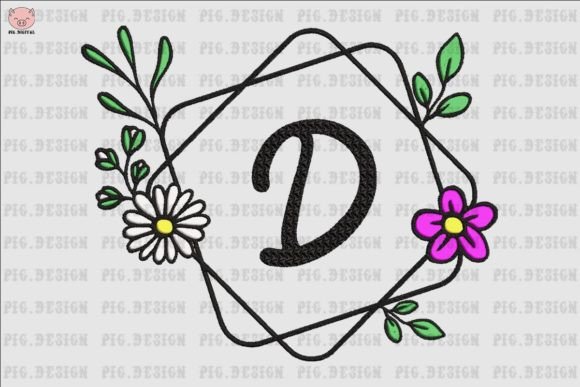
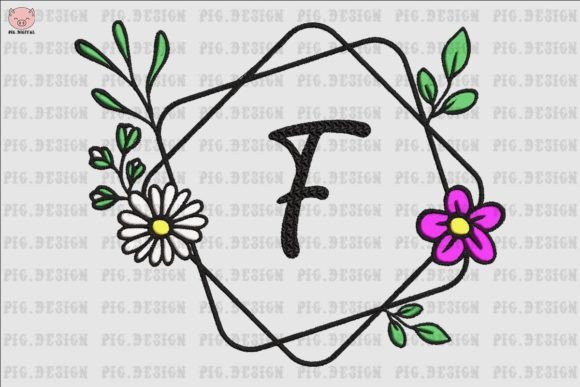
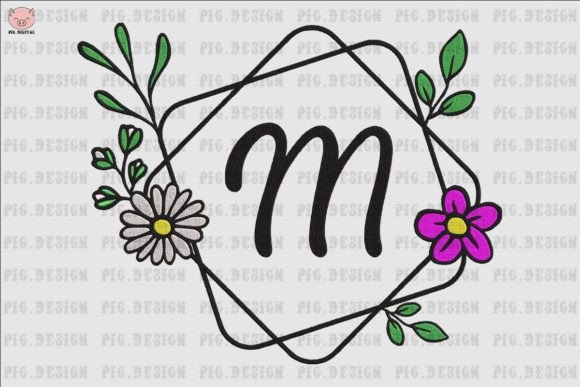
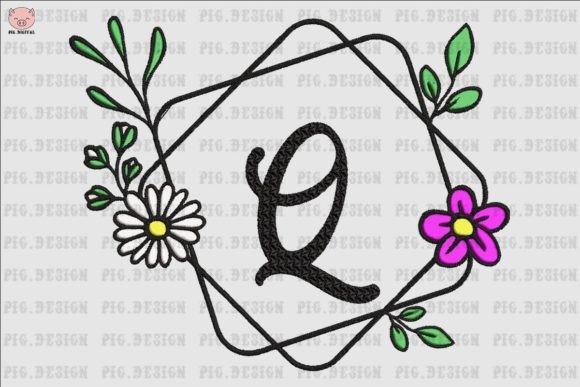
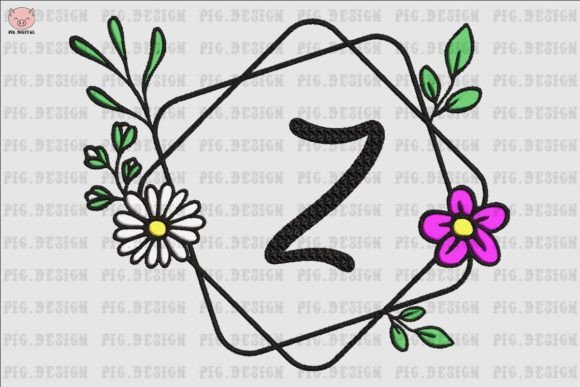
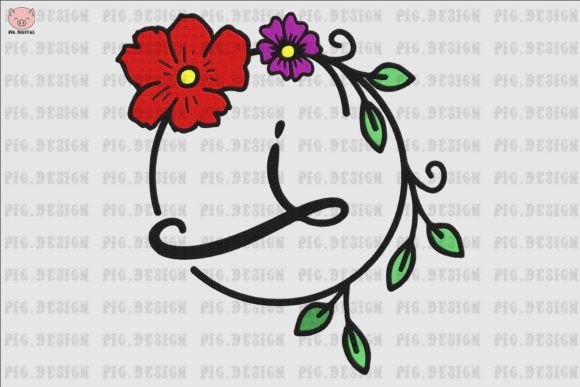
Flower Font I is a digitized machine embroidery font designed specifically to mimic delicate, hand-drawn floral lettering. Unlike standard block or script fonts, it integrates botanical motifs—such as petite blossoms, slender stems, and subtle leaf accents—directly into each character’s structure. It is not a TrueType or OpenType font for digital text, but rather a set of stitch-based embroidery design files intended for use with home and commercial embroidery machines.
Each letter, number, and common punctuation mark in Flower Font I is individually digitized to maintain consistent stitch density, smooth curves, and balanced fill-to-outline ratios. The design prioritizes clean hooping, reliable thread coverage, and minimal underlay—factors that influence both visual quality and machine performance. It is distributed in multiple industry-standard formats, including .pes, .jef, .hus, .vip, .dst, and .exp, enabling compatibility across major brands such as Brother, Janome, Bernina, Husqvarna Viking, and Tajima-compatible systems.
Why Consider Flower Font I?
Embroiderers often seek fonts that elevate personalization without requiring advanced digitizing skills. Flower Font I appeals to those who want to add thematic cohesion to projects—especially where softness, femininity, or garden-inspired aesthetics are desired. It’s frequently used on baby clothing, nursery linens, bridal accessories, spring-themed home decor, and handmade birthday gifts like tea towels or framed hoop art.
Its appeal lies partly in its ready-to-use nature: no manual editing is needed to achieve a cohesive floral motif across words or phrases. Users can type out names, dates, or short quotes and stitch them directly—provided their embroidery software supports font-style import (e.g., via Wilcom Truesizer, Embrilliance, or PE-Design). This saves time compared to stitching individual floral motifs alongside plain text.
Key Benefits and Realistic Expectations
One benefit of Flower Font I is its consistency across sizes. Because it is pre-digitized at multiple common heights (typically 1.5", 2", and 2.5"), scaling within compatible software usually preserves legibility and stitch integrity better than resizing a single file arbitrarily. The design also tends to perform well on stable, medium-weight fabrics like cotton twill, linen, and quilting cotton—materials commonly used in apparel and home goods.
However, users should expect limitations. Flower Font I is not optimized for very small applications (under 1" height), where fine stem details may not resolve cleanly on fabric. Similarly, dense satin-stitched letters may require stabilizer adjustments on knit or stretchy materials; lightweight cutaway or tear-away stabilizers are recommended, but testing on scrap fabric remains essential. Thread choice also affects outcome: matte cotton or rayon threads tend to enhance the organic feel, while high-sheen polyester may emphasize mechanical precision over softness.
Another consideration is spacing. While kerning is applied during digitizing, automatic word spacing in embroidery software varies by platform. Some users report needing minor manual adjustment between characters for optimal visual rhythm—particularly with longer names or phrases containing repeating letters like “ll” or “oo.”
When Flower Font I Fits Well
Flower Font I is a strong fit for embroiderers whose goals align with its design intent and technical scope. This includes:
- Those creating themed items—such as monogrammed baby blankets, floral wedding sachets, or spring festival banners—where stylistic unity matters more than typographic versatility;
- Users working primarily with stable woven fabrics and standard embroidery machines, without frequent need for ultra-fine detail or extreme scaling;
- Hobbyists or small-batch makers who value time efficiency and repeatable results over full custom digitizing;
- Designers seeking a middle ground between generic script fonts and fully custom floral lettering, especially when budget or timeline constraints limit outsourcing to a professional digitizer.
In these contexts, Flower Font I delivers predictable output with relatively low learning overhead—assuming basic familiarity with importing and positioning embroidery files.
When Alternatives May Be More Suitable
Flower Font I is less appropriate in situations demanding flexibility beyond its fixed structure. For example:
- If your project requires mixing uppercase and lowercase letters with varying baseline alignment—or integrating numbers and symbols that don’t match the floral motif’s weight—the uniformity of Flower Font I may feel restrictive. In such cases, pairing a simpler embroidery font with separate, scalable floral elements offers greater compositional control.
- For technical applications—like corporate branding on uniforms or safety-critical labeling—legibility at distance or under lighting variations takes priority over decorative flair. A clean, high-contrast sans-serif embroidery font would be more functional.
- If you regularly embroider on challenging substrates (e.g., fleece, velvet, or performance athletic wear), you may find that fonts with lower stitch density and simplified outlines yield more reliable results than Flower Font I’s moderate fill complexity.
- Designers aiming for highly personalized, one-of-a-kind lettering—such as incorporating a client’s favorite flower species or adapting letterforms to match existing artwork—will likely need custom digitizing rather than relying on a pre-made set.
Making an Informed Choice
Before selecting Flower Font I, consider three practical questions:
- What is the primary use case? If it’s recurring seasonal projects or gifts where floral charm enhances meaning, Flower Font I aligns well. If the need is broader—spanning formal, casual, and technical contexts—a modular approach (base font + interchangeable motifs) may offer longer-term utility.
- What is your current workflow? If you rely heavily on auto-digitizing tools or frequently adjust letter spacing and sizing on-the-fly, verify whether your software handles Flower Font I’s format natively—and whether preview modes accurately reflect final stitch behavior.
- What level of testing can you commit to? Even high-quality embroidery files behave differently across machines, hoops, threads, and fabrics. Budget time for test runs, especially if stitching on new materials or using unfamiliar stabilizers.
Also note that licensing terms vary by vendor. Some versions permit unlimited personal and small-business use; others restrict resale of finished items or prohibit redistribution of the design files themselves. Review the license before purchase to ensure it matches your intended application.
In summary, Flower Font I serves a specific niche effectively: embroidered typography that merges readability with gentle botanical character. It is neither a universal solution nor a shortcut—but rather a purpose-built tool. Its value emerges most clearly when matched thoughtfully to project goals, material choices, and operational capacity. Evaluating it alongside your actual workflow—not just its visual appeal—helps determine whether it supports your embroidery practice sustainably over time.