Flower Font F: A Thoughtful Choice for Embroidery Lettering
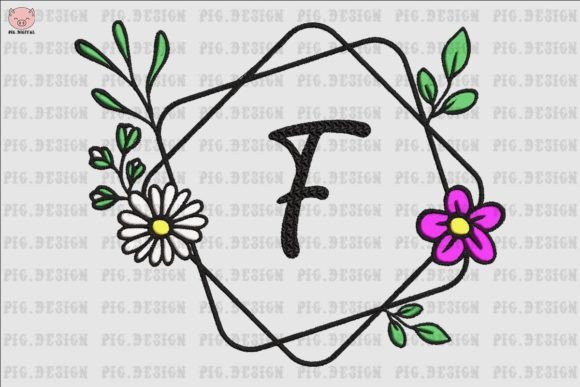
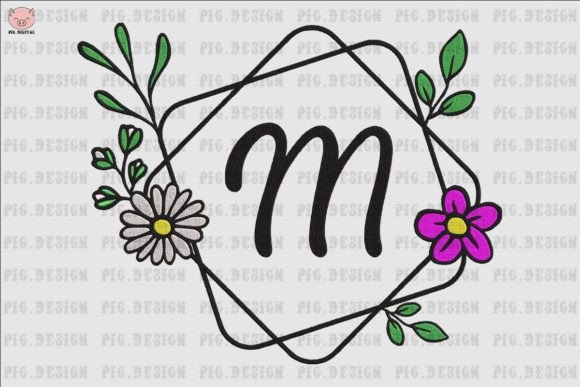
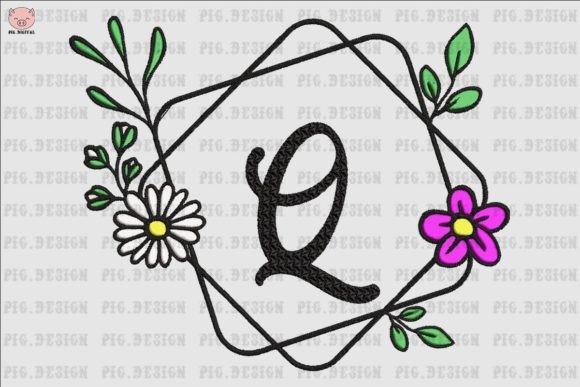
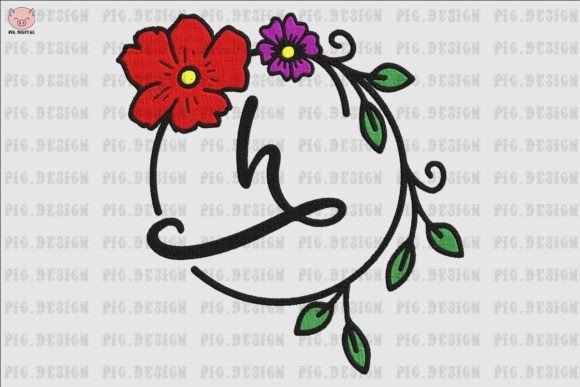
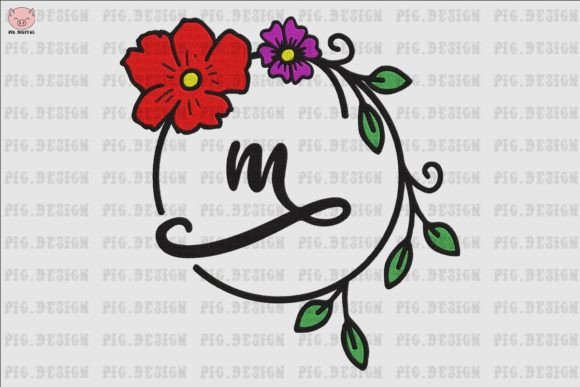
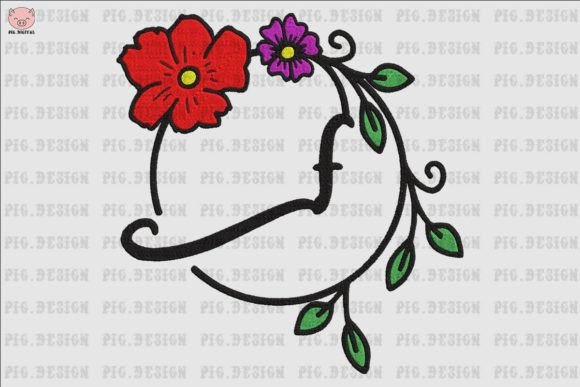
Flower Font F is a machine embroidery font design distinguished by its delicate, botanical-inspired letterforms—each character features subtle floral motifs integrated into the strokes, curves, and terminals. Unlike generic script or block fonts, Flower Font F balances legibility with ornamental detail, making it especially well-suited for projects where elegance and personalization matter. It’s not just decorative filler; it’s a functional alphabet designed to stitch cleanly across fabric types, from lightweight cotton to medium-weight linen and stable home-decor canvas.
What Sets Flower Font F Apart
At its core, Flower Font F is built for practicality—not just aesthetics. The digitization prioritizes stitch stability: underlay is optimized to prevent puckering on stretchy knits, and satin column widths are calibrated to avoid thread breakage at tight turns. Each letter includes consistent spacing and kerning pairs, so “FL” or “FF” won’t crowd or gap unnaturally when stitched out. That attention to technical execution separates it from many hand-digitized or AI-assisted fonts that look lovely on screen but struggle in the hoop.
Another distinguishing feature is its format flexibility. Flower Font F is delivered in multiple native embroidery file types—including PES, DST, EXP, JEF, VIP, and XXX—so it works across major brands like Brother, Janome, Bernina, Husqvarna Viking, and Baby Lock without conversion. No third-party software is required to open or load the files, reducing compatibility friction for users who prefer plug-and-play workflows.
How It Fits Into Broader Embroidery Font Categories
Embroidery fonts broadly fall into three functional categories: utility fonts (designed for clarity and speed), decorative fonts (prioritizing visual impact over readability), and hybrid fonts (balancing both). Flower Font F sits firmly in the hybrid group—but leans more toward decoration than utility. It’s less suitable for small monograms under 1 inch tall or dense text blocks (e.g., full paragraphs), but excels in mid-to-large scale applications: names on baby blankets, quotes on tea towels, or greetings on tote bags.
Compared to classic script fonts like “Lavender Lace” or “Bloom Script,” Flower Font F uses fewer overlapping stitches and avoids excessive fill elements—making it faster to embroider and easier to edit. Compared to geometric or modern sans-serif embroidery fonts, it offers warmth and tactile charm, but sacrifices some neutrality. If your project calls for crisp corporate branding or minimalist labeling, Flower Font F may feel too expressive. But for handmade gifts, nursery decor, or boutique apparel, its personality becomes an asset—not a limitation.
Real-World Use Cases and Practical Considerations
Consider a few realistic examples:
- Clothing personalization: Stitching “Ella” across the chest of a soft cotton onesie. Flower Font F’s gentle curves and low-density satin stitching hold up well after repeated washing—especially when paired with a light tear-away stabilizer.
- Home decor accents: Adding “Gather” to a linen pillow cover. Here, the floral details echo botanical prints often found in contemporary interiors, creating cohesion without matching exactly.
- Birthday gifts: Embroidering “Happy 5th Birthday!” on a denim backpack. The font’s moderate height (recommended minimum 2.5 inches wide for full legibility) ensures readability while keeping the design proportionate to the item’s scale.
That said, Flower Font F isn’t universally ideal. On highly textured fabrics—like bouclé wool or heavy burlap—the fine petal-like flourishes may get lost visually or distort physically during stitching. Similarly, if you’re working with metallic or specialty threads, test first: the narrowest satin columns (found in letters like “i,” “l,” or “t”) can highlight thread inconsistencies more than bolder fonts would.
Strengths and Tradeoffs, Clearly Stated
Strengths:
- Strong visual identity without sacrificing stitch integrity
- Broad machine compatibility out of the box
- Thoughtful spacing and sizing guidance included with purchase
- Works well with both natural and synthetic stabilizers
Tradeoffs:
- Not optimized for very small-scale embroidery (under 1.5 inches)
- Limited language support—primarily English uppercase/lowercase, numerals, and basic punctuation
- No built-in alternate characters or swashes (unlike some premium script fonts)
- Less adaptable for multi-color fills or layered effects without manual editing
When Flower Font F Is Likely the Right Fit
Flower Font F tends to be the strongest choice when your goal is to add quiet sophistication—not loud statement-making—to a project. It shines when the context values craftsmanship and intentionality: custom heirloom pieces, small-batch apparel labels, wedding-related textiles (think napkin corners or favor tags), or curated home goods sold through platforms like Etsy or local craft fairs.
It also suits makers who value consistency across projects. Because the font’s proportions and density remain predictable, you can develop a recognizable “signature style” over time—whether you’re stitching dozens of baby quilts or rotating seasonal pillow covers. That repeatability supports both creative confidence and production efficiency.
When You Might Explore Alternatives
If your work involves frequent multilingual text—such as bilingual baby announcements or multicultural event décor—Flower Font F’s limited glyph set may require supplemental fonts or manual digitizing. Likewise, if you regularly embroider on unstable or highly stretchy substrates (like performance athletic wear or knit scarves), a font with heavier underlay and simplified outlines—such as a clean, condensed block font—may deliver more reliable results.
Makers who rely heavily on automatic letter-spacing tools or built-in machine text editors may find Flower Font F less convenient than system-native fonts. Since it’s distributed as pre-digitized designs rather than editable text objects, adjustments to tracking or baseline alignment must be done in embroidery editing software (e.g., Wilcom, Embrilliance, or Hatch) or manually via machine controls.
Making an Informed Decision
Choosing Flower Font F shouldn’t hinge solely on how “pretty” it looks in a preview image. Instead, ask yourself a few grounded questions:
- What’s the primary fabric—and how forgiving is it?
- What’s the typical size range I’ll use this font in?
- Do I need to adapt letterforms frequently (e.g., swapping capitals, adding accents)?
- How much time am I willing to spend testing, tweaking, or stabilizing before final stitching?
If your answers point toward stable fabrics, moderate-to-large lettering, and a preference for ready-to-stitch reliability over maximum flexibility, Flower Font F aligns well. If you prioritize adaptability, multilingual support, or ultra-compact scaling, other options—whether commercially digitized fonts or custom-drawn alternatives—may better serve your long-term workflow.
Ultimately, Flower Font F reflects a specific philosophy: that embroidery lettering can be both beautiful and technically sound—not despite its ornamentation, but because of how thoughtfully that ornamentation is engineered. It won’t replace every font in your library, but for the right moment, it adds a layer of meaning and care that goes beyond mere decoration.